
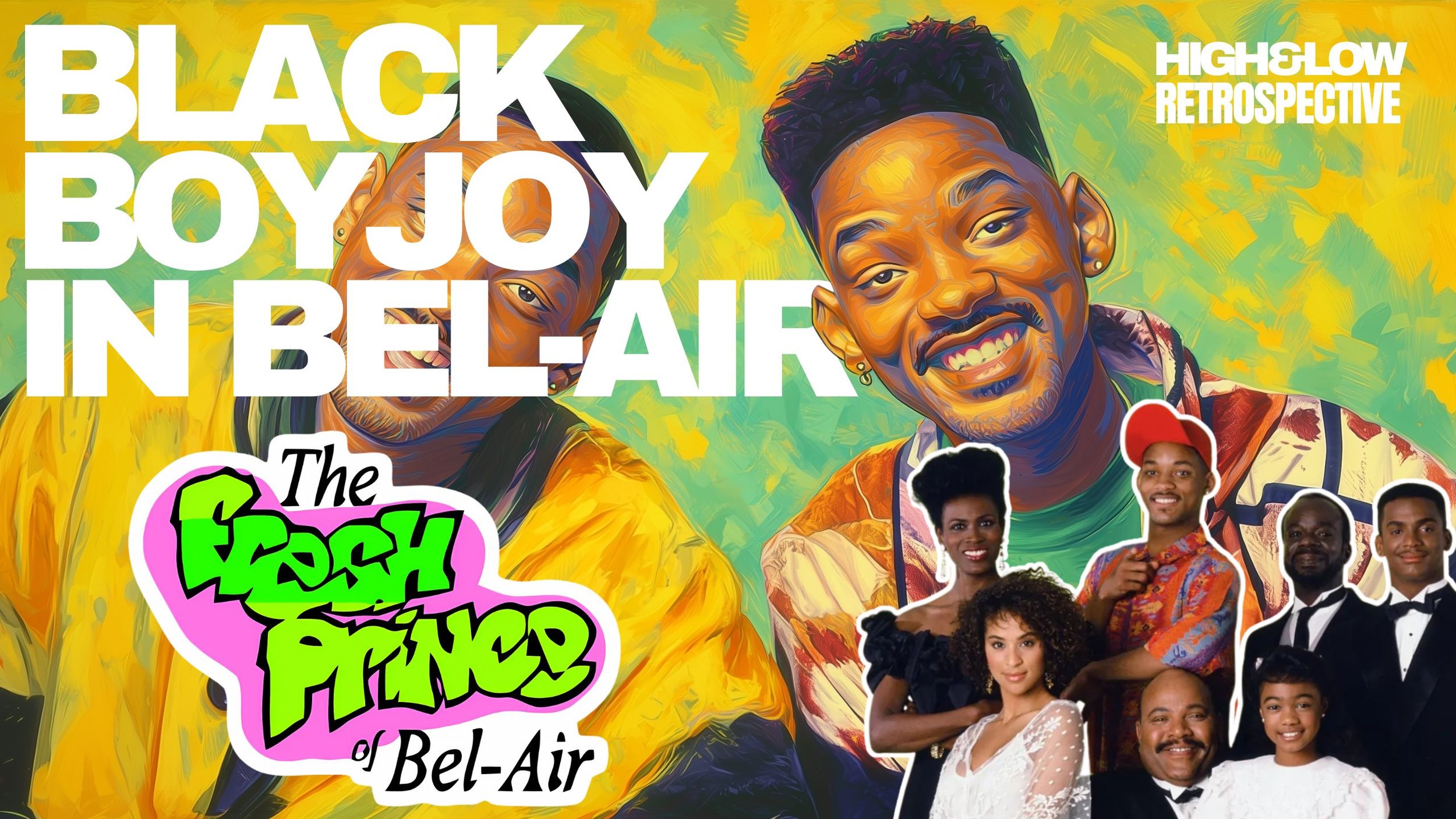
He got in one little fight and reminded a generation they were allowed to feel.
The Fresh Prince of Bel-Air wasn’t just a sitcom. It was a cultural reset. In the 1990s, Will Smith’s charisma and humor gave us laughter, but also vulnerability. It showed that Black boys could be silly, soft, emotional, and joyful—at a time when TV often painted them only as hardened or one-dimensional.
In this High and Low Retrospective, we explore how The Fresh Prince reframed Black Boy Joy through humor, class migration, and emotional honesty. From Will’s fish-out-of-water antics in Bel-Air to his iconic breakdown in the classic episode "Papa's Got a Brand New Excuse" (“Why don’t he want me, man?”) - the show taught audiences that joy could be resistance, and vulnerability could be strength.
We’ll look back at:
The show’s origins and Quincy Jones’ vision
Will Smith’s leap from rapper to sitcom star
James Avery’s legendary performance as Uncle Phil
Guest stars like Queen Latifah, Tyra Banks, Don Cheadle, and Boyz II Men who expanded its cultural reach
How the series shaped masculinity, identity, and belonging for a generation
More than nostalgia, Fresh Prince was care, catharsis, and comedy all in one. And decades later, its lessons still resonate.
Watch more High and Low Retrospectives here
Related videos to watch:
Martin: The Funniest Show of the 90s?