
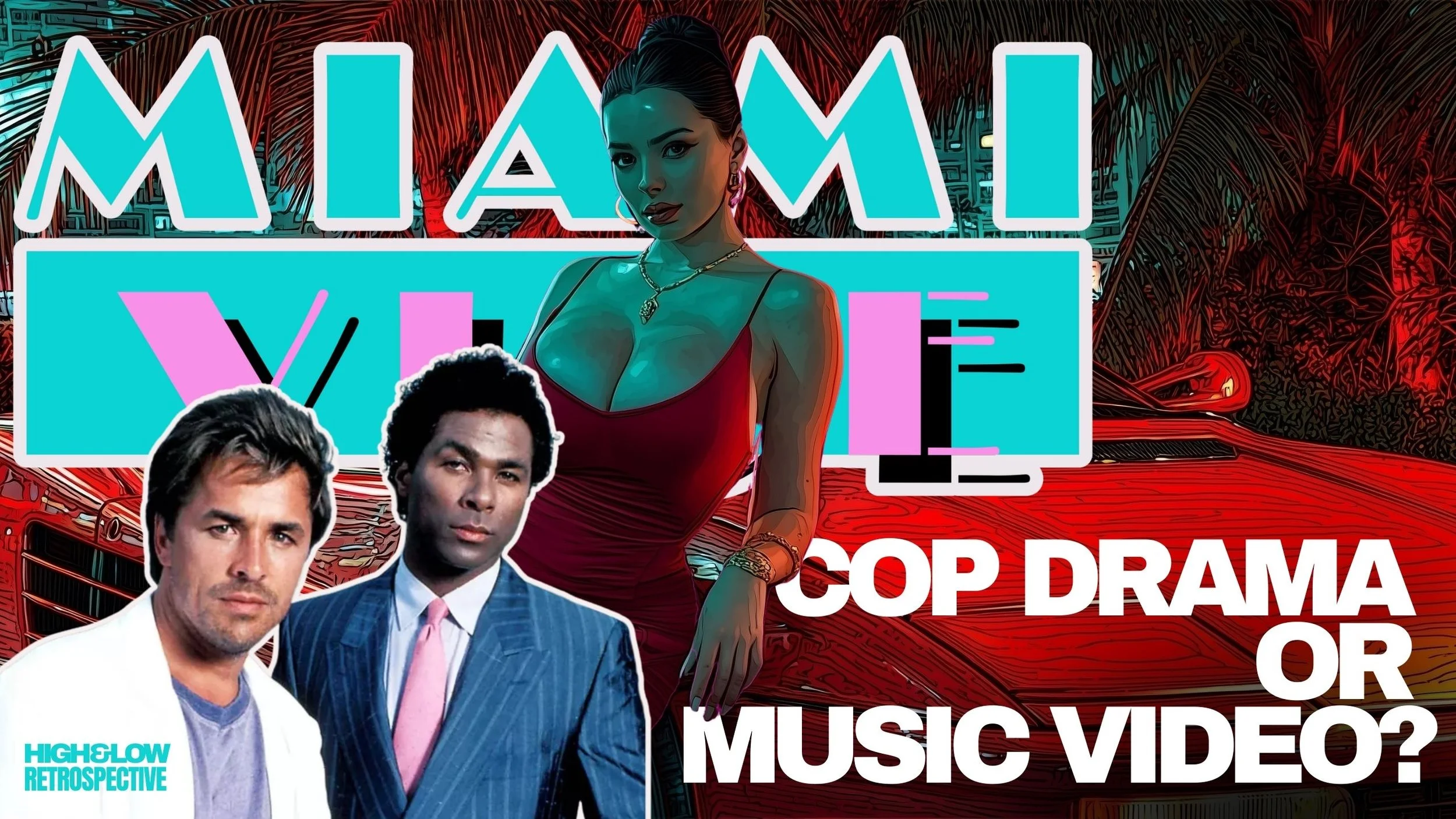
This is the story of Miami Vice—the neon-soaked, pastel-drenched drama that transformed television in the 1980s. Don Johnson’s Sonny Crockett and Philip Michael Thomas’ Rico Tubbs weren’t just cops—they were cultural icons, gliding through Miami nights with Phil Collins, Tina Turner, and Glenn Frey providing the soundtrack. Unlike other procedurals of its time, Miami Vice used music, fashion, and color as narrative tools. It blurred the lines between MTV and NBC, making every episode feel cinematic. With Edward James Olmos’ quiet gravitas as Lt. Castillo, Saundra Santiago’s toughness as Gina, and guest stars ranging from Bruce Willis and Julia Roberts to Miles Davis and Willie Nelson, the show became a living time capsule of 1980s culture. In this High and Low Retrospective, we explore how Miami Vice pioneered the “music video aesthetic,” why it mattered, and how its legacy still shapes TV and film today. From its iconic use of “In the Air Tonight” to its lasting influence on everything from CSI to John Wick, this is how Miami Vice changed television forever.
Saturday Night Live: What is SNL's Greatest Season? →
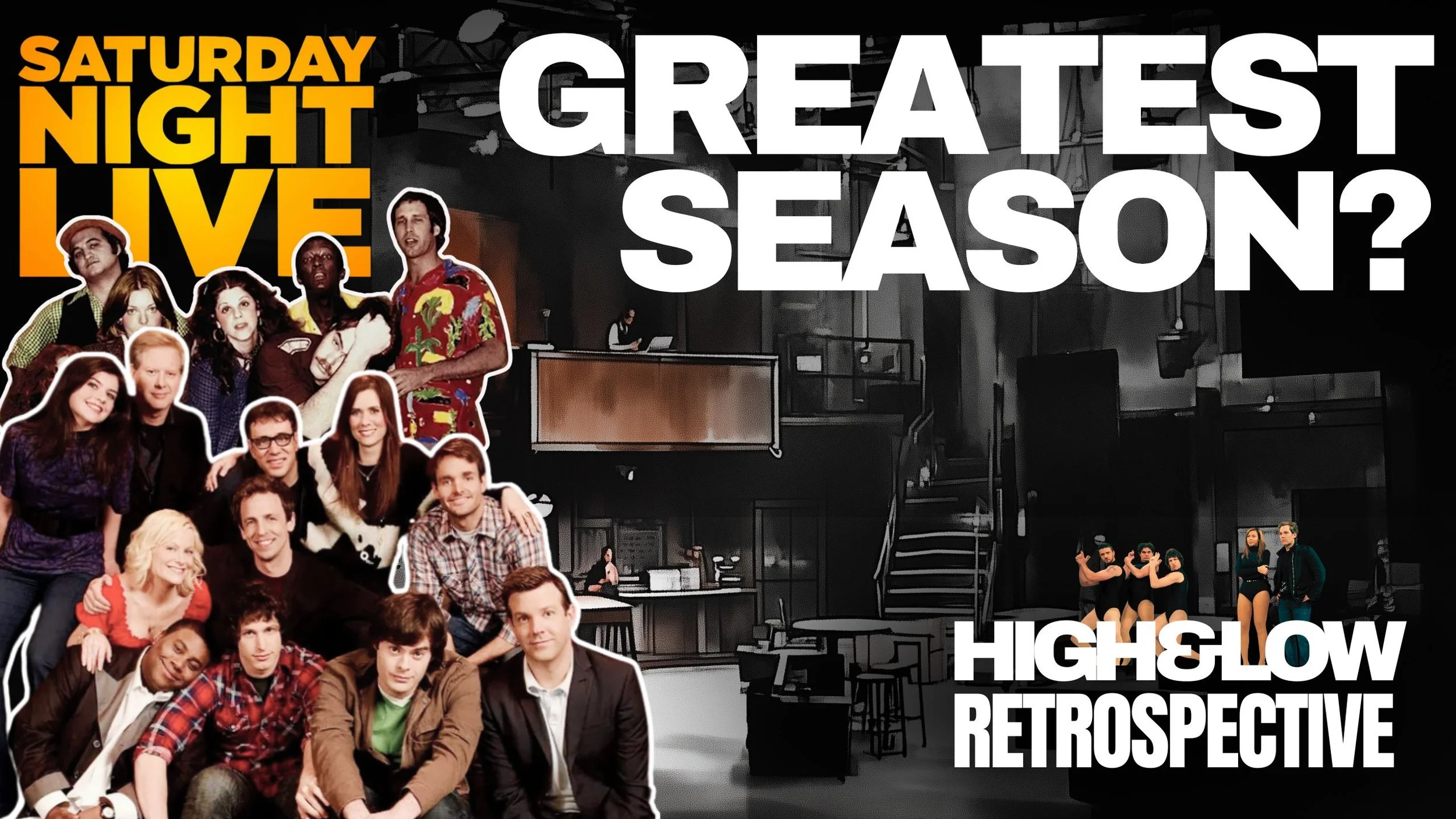
Which season of Saturday Night Live was the greatest of all time? In this episode of High and Low Retrospective, we go deep into the season that redefined late-night sketch comedy—featuring a legendary cast, breakout sketches, cultural moments, and a creative high point that hasn’t been matched since.
Was it the era of Eddie Murphy’s superstardom? The rise of Will Ferrell and Tina Fey? Or maybe the early days of Bill Murray and Gilda Radner? We break down: The cast that made it iconic, the cultural and political backdrop, the sketches that still live rent-free and why this season still resonates decades later.
The Party Machine with Nia Peeple: Inside The Forgotten Arsenio Hall Spinoff →
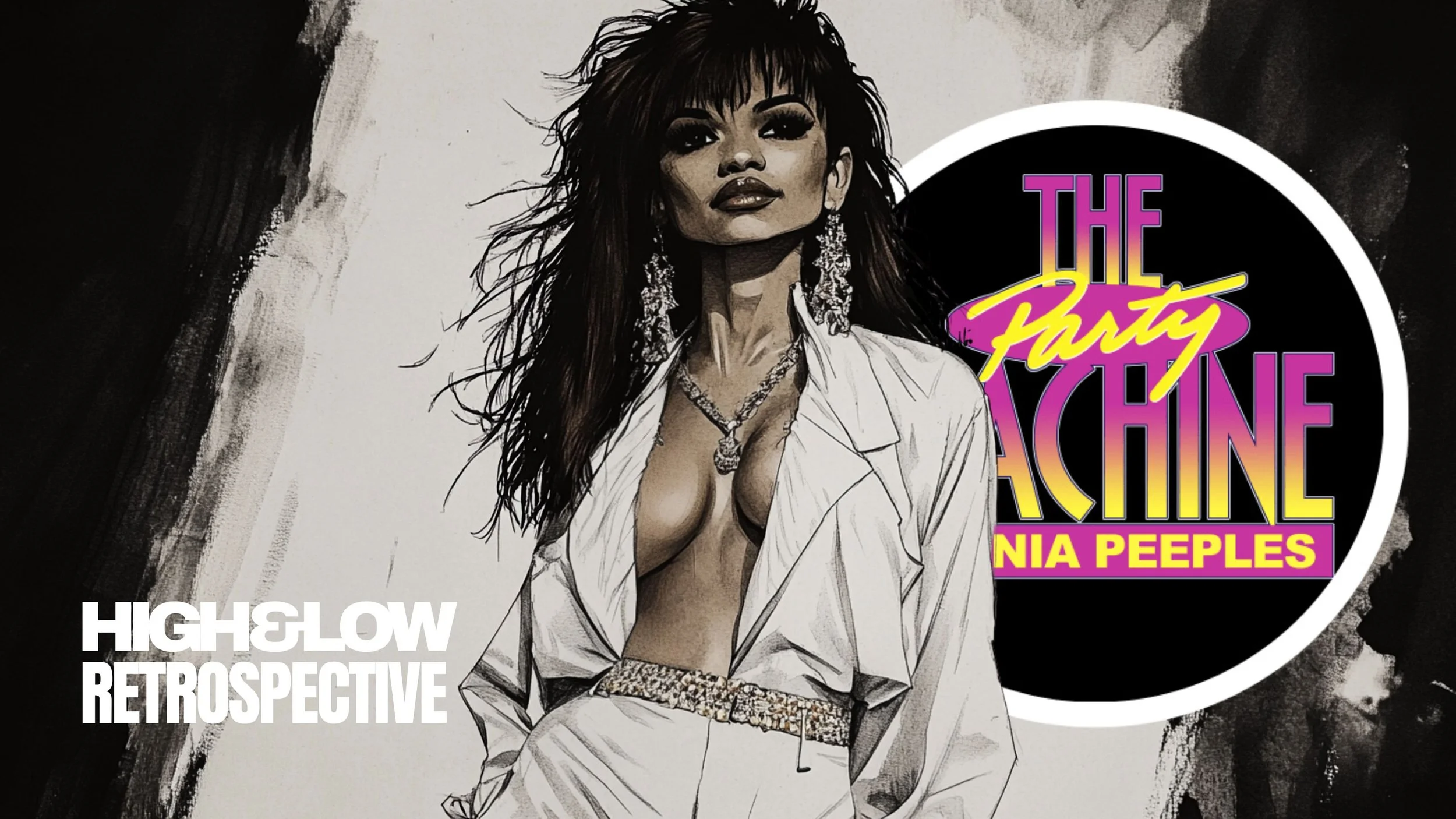
Before TikTok dance trends and MTV’s TRL, there was The Party Machine with Nia Peeples—a short-lived but unforgettable late-night music and dance show that hit the airwaves in 1991. Spun off from the massive success of The Arsenio Hall Show, The Party Machine aimed to be the after-party for America’s night owls, mixing R&B, hip hop, club vibes, and high-energy dance floors all under one neon-lit roof.
In this High and Low Retrospective, we revisit the electric atmosphere of The Party Machine, its place in early ’90s pop culture, and how Arsenio Hall’s trailblazing influence helped launch one of TV’s most unique experiments in late-night programming. From guest appearances by rising stars to its connection with Black culture, club scenes, and televised music performances, this retrospective uncovers why the show burned bright—even if just for a moment.